- Inducted
- 2014
- Category
- Coach
Hall of Fame
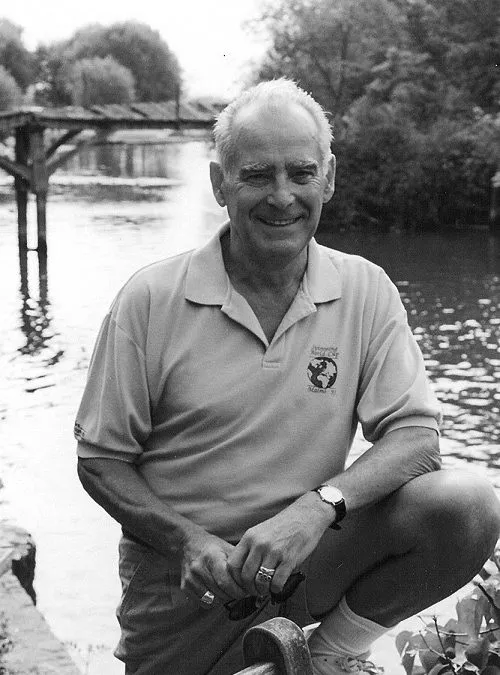
Deryk Snelling
Deryk Snelling
Coach | Inducted 2014
July 22, 1933 – September 4, 2021
Birthplace: Darwen, Lancashire, England
Deryk Snelling was one of the most successful and influential coaches in the history of Canadian swimming. Over a career spanning more than three decades at the highest levels of the sport, Snelling developed Olympic champions, world-record holders and generations of national team swimmers while building some of Canada's most dominant club and university programs.
Before becoming a coach, Snelling was himself an accomplished swimmer in England. A British national swimmer and English champion, he competed in breaststroke and butterfly before turning his attention to coaching. He began his professional coaching career with the Southampton Swimming Club in England in the early 1960s, where his athletes included David Haller, who would later become one of Britain's most successful Olympic coaches.
In 1967, Snelling moved to Canada to take over the Canadian Dolphin Swim Club in Vancouver, succeeding another legendary Canadian coach, Howard Firby. The move began an extraordinary period in Canadian swimming.
Under Snelling, the Canadian Dolphins became one of the strongest programs in North America and supplied a remarkable number of athletes to Canadian international teams. Among the swimmers he coached in Vancouver were Leslie Cliff, Bruce Robertson, Bill Mahony, Donna-Marie Gurr and Wendy Cook.
At the 1972 Olympic Games in Munich, Snelling's athletes delivered some of Canada's most significant swimming performances of the era. Leslie Cliff won silver in the 400-metre individual medley, while Bruce Robertson earned silver in the 100-metre butterfly and bronze as part of Canada's 4x100-metre medley relay team.
The range of those performances reflected one of the defining characteristics of Snelling's coaching philosophy. Although he became particularly associated with the individual medley, he believed strongly in developing swimmers across all four strokes. His book, All About Individual Medley, emphasized the importance of comprehensive stroke development rather than early specialization.
That philosophy helped produce internationally ranked swimmers in virtually every stroke and event.
After leaving Vancouver, Snelling became Head Coach of the Etobicoke Swim Club in Ontario in 1976. He continued to build national championship programs and develop international-calibre athletes before moving west again in 1980 to take over the University of Calgary and University of Calgary Swim Club.
It was in Calgary that Snelling created perhaps his most enduring program.
Over 16 years at the University of Calgary, he transformed the Dinos into the dominant men's university swimming program in Canada. His men's teams won nine national championships and 11 Canada West titles, while his women's teams also captured multiple conference championships. The program became a destination for some of Canada's leading swimmers and a central part of the country's high-performance system.
Among the athletes who trained under Snelling in Calgary were Tom Ponting, Graham Smith, Jon Cleveland and, most famously, Mark Tewksbury.
Tewksbury joined Snelling's program as a developing backstroker and spent more than a decade under his guidance. He progressed from making his first international team as a teenager to becoming one of the world's leading backstroke swimmers.
At the 1988 Olympic Games in Seoul, Tewksbury finished fifth in the 100-metre backstroke and helped Canada win silver in the 4x100-metre medley relay. Rather than allowing the disappointment of the individual event to define the following four years, Snelling and Tewksbury continued refining his technique, preparation and racing.
Their work culminated at the 1992 Olympic Games in Barcelona.
In one of the most memorable moments in Canadian swimming history, Tewksbury won the 100-metre backstroke Olympic title. His victory came two decades after Snelling had coached Leslie Cliff and Bruce Robertson to Olympic medals in Munich, underscoring the extraordinary longevity of Snelling's success at the highest level.
Snelling's contribution to Canadian swimming extended well beyond the athletes he personally coached. Beginning in 1972, he served Canada at seven consecutive Olympic Games through 1996, including multiple assignments as national team head coach. His international coaching résumé also included World Championships, Commonwealth Games, Pan American Games and Pan Pacific Championships.
Across his career, Snelling's swimmers accumulated an extraordinary international record. International Swimming Hall of Fame records credit him with placing 57 swimmers on Olympic teams through 1992, with 19 Olympic medals earned by those athletes. His swimmers also won 10 World Championship medals, 38 Pan American Games medals, 65 Commonwealth Games medals and 27 Pan Pacific Championship medals while setting six world records.
Those numbers were already remarkable when Snelling was inducted into the International Swimming Hall of Fame in 1993, and his coaching career continued beyond that induction.
At the domestic level, Snelling's programs were equally dominant. International Swimming Hall of Fame records credit his teams with 72 Canadian national team championships and his swimmers with more than 400 individual and relay national titles.
Snelling was also an important mentor to coaches. He encouraged swimmers to remain in the sport after their competitive careers and take up coaching themselves. One of the earliest and most notable examples was David Haller, whom Snelling coached in Southampton before Haller went on to become a long-time British Olympic coach.
That ability to develop not only successful athletes but future coaches became another important part of Snelling's influence on international swimming.
His accomplishments brought recognition both within sport and beyond it. Snelling received the Order of Canada in 1977 for his contribution to Canadian swimming. He was repeatedly named Canadian Swim Coach of the Year and earned numerous national university coaching awards during his years at Calgary.
In 1993, Snelling was inducted into the International Swimming Hall of Fame, one of the highest honours available in the sport. He was subsequently inducted into the University of Calgary Hall of Fame, the BC Sports Hall of Fame and Swimming Canada's Circle of Excellence before joining the Canadian Swimming Coaches Association Hall of Fame in 2014.
Snelling died in 2021 at the age of 88.
His legacy is visible across several generations of Canadian swimming. From Leslie Cliff and Bruce Robertson in the early 1970s to Mark Tewksbury's Olympic victory in 1992, Snelling repeatedly demonstrated an ability to develop athletes capable of competing with the best swimmers in the world.
Just as importantly, he built programs capable of sustaining that excellence.
The Canadian Dolphin Swim Club, Etobicoke Swim Club and University of Calgary each became national powers under his leadership. His belief in developing complete swimmers, his insistence on international standards and his influence on the coaches who followed him helped reshape expectations for high-performance swimming in Canada.
Deryk Snelling was not simply a successful Canadian coach. His induction into the International Swimming Hall of Fame recognized something larger: he was one of the significant international swimming coaches of his era and one of the foundational figures in the development of modern Canadian swimming.
Achievements
Career Highlights
Major Canadian Programs
Southampton Swimming Club, England
Canadian Dolphin Swim Club, Vancouver
Etobicoke Swim Club, Ontario
University of Calgary Swim Club
University of Calgary Dinos
Selected National Team Appointments
1972 Olympic Games, Munich
1973 World Championships, Belgrade
1974 Commonwealth Games, Christchurch
1975 World Championships, Cali
1976 Olympic Games, Montreal – Head Coach
1980 Olympic Games, Moscow – Head Coach, Women's Team
1984 Olympic Games, Los Angeles – Head Coach, Men's Team
1986 Commonwealth Games, Edinburgh – Head Coach
1987 Pan Pacific Championships, Brisbane
1988 Olympic Games, Seoul
1990 Commonwealth Games, Auckland
1991 World Championships, Perth – Head Coach
1992 Olympic Games, Barcelona – Head Coach
1994 Commonwealth Games, Victoria
1994 World Championships, Rome
1995 Pan American Games, Mar del Plata
1995 World Short Course Championships, Rio de Janeiro
1996 Olympic Games, Atlanta
2002 Commonwealth Games, Manchester – Personal Coach
Notable Athletes
Leslie Cliff, Bruce Robertson, Bill Mahony, Donna-Marie Gurr, Wendy Cook, Tom Ponting, Graham Smith, Jon Cleveland and Mark Tewksbury
Selected International Results
Leslie Cliff: Olympic silver, 400-metre individual medley – 1972
Bruce Robertson: Olympic silver, 100-metre butterfly – 1972
Mark Tewksbury: Olympic champion, 100-metre backstroke – 1992
57 swimmers placed on Olympic teams through 1992
19 Olympic medals recorded by ISHOF at the time of his induction
10 World Championship medals
38 Pan American Games medals
65 Commonwealth Games medals
27 Pan Pacific Championship medals
Six world records
Honours
Order of Canada – 1977
Multiple Canadian Swim Coach of the Year Awards
Seven-time national university Coach of the Year
International Swimming Hall of Fame – 1993
University of Calgary Hall of Fame – 2004
BC Sports Hall of Fame – 2006
Swimming Canada Circle of Excellence – 2007
CSCA Hall of Fame – 2014
Canada West Hall of Fame – 2022, posthumously