- Inducted
- 2022
- Category
- Coach
Hall of Fame
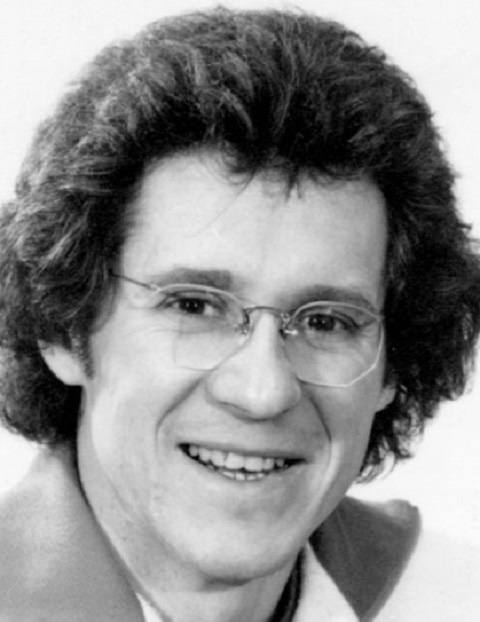
Ron Jacks
Ron Jacks
Coach | Inducted 2022
Born January 23, 1948
Birthplace: Winnipeg, Manitoba
Few individuals have contributed to Canadian swimming across as many disciplines, generations and roles as Ron Jacks.
A three-time Olympian as an athlete before beginning a coaching career that extended for more than five decades, Jacks developed Olympic, Paralympic and world champions in pool and open-water swimming. He built and led some of British Columbia's most important swimming programs, helped establish clubs that continue to shape the sport today, served Canadian national teams, advocated strongly for the coaching profession and remained an influential presence on Canadian pool decks for more than 60 years.
Born in Winnipeg in 1948, Jacks moved with his family to Vancouver as a child and began competitive swimming with the Vancouver YMCA. He quickly emerged as one of Canada's leading swimmers, earning selection to his first Olympic Games in Tokyo in 1964 while still a teenager.
Jacks went on to represent Canada at three consecutive Olympic Games—Tokyo 1964, Mexico City 1968 and Munich 1972—and competed internationally across freestyle and butterfly events. During his collegiate career, he attended Indiana University and trained under legendary International Swimming Hall of Fame coach James “Doc” Counsilman, one of the most influential swimming coaches of the twentieth century.
The experience helped shape the coaching career that followed.
After retiring from international competition, Jacks began coaching in Vancouver at the Arbutus Club and helped establish Vancouver Pacific Swim Club. In 1974, he became Head Coach of the Hyack Swim Club in New Westminster, beginning a decade-long tenure that established him among Canada's leading young coaches.
It was at Hyack that Jacks coached his first Olympic medallist.
Shannon Smith was only 14 when she represented Canada at the 1976 Olympic Games in Montreal. In the 400-metre freestyle, she won the bronze medal, becoming one of the youngest Canadian Olympic swimming medallists in history.
The achievement established Jacks as an Olympic medal-producing coach just four years after the end of his own Olympic swimming career.
His success continued.
At the 1984 Olympic Games in Los Angeles, Pamela Rai earned bronze as part of Canada's 4x100-metre medley relay. Her medal gave Jacks a second athlete on the Olympic podium and came as his coaching career was entering an important new chapter.
In 1984, Jacks moved to Victoria to become Head Coach of the Victoria Amateur Swim Club. Four years later, he helped establish Island Swimming, serving as its Director of Swimming until 2002.
The program became one of Canada's most significant high-performance swimming environments and helped establish Victoria as a centre for elite swimming. Athletes coached by Jacks during his years in Victoria included Olympians and international swimmers Christin Petelski, Nikki Dryden, Jon Kelly, Rick Say and Nathan O'Brien, among many others.
Jacks' work was notable not simply for the number of international athletes he developed, but for the extraordinary range of swimming disciplines in which they succeeded.
One of the most remarkable examples was Michael Edgson.
A visually impaired swimmer from British Columbia, Edgson became one of Canada's greatest Paralympic athletes. Across three Paralympic Games, he amassed an extraordinary collection of gold and silver medals while establishing nine world records.
At the 1988 Paralympic Games in Seoul alone, Edgson won nine gold medals and set four world records.
Jacks was among the coaches who guided Edgson during his extraordinary international career, demonstrating an ability to apply high-performance coaching principles successfully to Para swimming as well as the Olympic program.
Another chapter followed with Stephanie Dixon.
Dixon became one of the most decorated swimmers in Canadian Paralympic history. Training with Pacific Coast Swimming under Jacks, she competed at the 2004 Paralympic Games in Athens and the 2008 Games in Beijing, winning multiple medals at both Games. Among her victories were gold medals in the 100-metre backstroke in both 2004 and 2008.
Jacks was also selected to Canada's Paralympic coaching staff, including the 2004 Games in Athens.
His contribution to Para swimming established one part of an achievement unmatched by any other Canadian swimming coach of his era.
At the same time, Jacks became one of Canada's foremost experts in open-water swimming.
Long before the 10-kilometre marathon became an Olympic event, he recognized open water as a discipline requiring specialized preparation, tactics and expertise.
His athletes became international leaders.
Kim Dyke won the Open Water World Cup Series in 1993.
A year later, Greg Streppel became world champion in the 25-kilometre open-water event at the 1994 World Championships in Rome.
Jacks' leadership in the discipline eventually led to his appointment as Swimming Canada's National Open Water Head Coach. His athletes continued to compete internationally at World Championships, Pan Pacific Championships and other major events, and Jacks was repeatedly recognized as Canada's Open Water Coach of the Year.
The culmination of that work came in 2012.
Richard Weinberger, training in Victoria with Jacks as his open-water coach, had already emerged internationally by winning the 10-kilometre marathon at the 2011 Pan American Games.
At the 2012 Olympic Games in London, Weinberger won bronze in the men's 10-kilometre marathon.
The medal gave Jacks something unique in Canadian swimming history.
He had now coached athletes to Olympic medals in traditional pool swimming and Olympic open water, while also contributing to the development of multiple Paralympic champions.
From Shannon Smith in the pool in Montreal in 1976 to Richard Weinberger in the Serpentine at London 2012, more than three decades separated Jacks' first and third Olympic medallists.
That longevity was characteristic of his entire career.
From 1976 through 2016, Jacks placed athletes on Olympic or Paralympic teams across successive generations. Swimming Canada ultimately described his competitive and coaching involvement as stretching across 60 years and 14 Olympic Games.
Jacks also played an important role as a builder.
After leaving Island Swimming in 2002, he helped establish Pacific Coast Swimming in Victoria and became its Director of Swimming. Alongside longtime coaching colleague Dr. Peter Vizsolyi and others, Jacks helped create a program closely connected to the University of Victoria that continued Victoria's tradition of developing national and international swimmers.
His influence extended beyond his own clubs.
Jacks earned NCCP Level IV and National Coaching Institute Master Coach qualifications and contributed extensively to the development and mentorship of other Canadian coaches. He served as a member of the Canadian Swimming Coaches Association Board of Directors and became a consistent advocate for the recognition, support and professional development of coaches.
His coaching accomplishments brought extensive recognition.
Jacks was named Canada's Swimming Coach of the Year in 1977, following Shannon Smith's Olympic breakthrough, and over the course of his career received the National Open Water Coach of the Year award numerous times.
Swimming Canada's historical awards records continue to show his remarkable longevity in the discipline: Jacks was Open Water Coach of the Year for Richard Weinberger in 2010, 2011, 2012, 2013 and again in 2017, and received the male Open Water coaching award in 2018.
His contribution has also been recognized through induction into numerous halls of fame.
The BC Sports Hall of Fame honoured Jacks for his achievements as an athlete, while the BC Swimming Hall of Fame has recognized his remarkable contribution to the sport. He entered the Greater Victoria Sports Hall of Fame as a coach in 2018.
In 2022, Swimming Canada inducted Jacks into its Circle of Excellence as both a swimmer and coach, recognizing a career that had connected virtually every era of modern Canadian swimming.
Later that year, his peers added another distinction when Ron Jacks was inducted into the Canadian Swimming Coaches Association Hall of Fame.
That honour was particularly meaningful to a coach who had spent decades supporting and advocating for his profession.
Jacks' career is difficult to summarize through a single athlete or accomplishment.
There is Shannon Smith's Olympic bronze in 1976.
Pamela Rai's Olympic relay medal in 1984.
Michael Edgson's extraordinary Paralympic dominance.
Stephanie Dixon's Paralympic championships.
Greg Streppel's 25-kilometre world title.
Richard Weinberger's Olympic open-water bronze in 2012.
But taken together, those achievements tell a larger story.
Ron Jacks demonstrated that great coaching principles could cross disciplines, classifications and generations. Whether working with an Olympic pool swimmer, a Paralympic champion or an athlete preparing to race 10 or 25 kilometres through open water, he continually found ways to help athletes compete successfully on the world's biggest stage.
His career began as a Canadian Olympian.
It became one of the longest and most diverse coaching careers in Canadian swimming history.
And through more than half a century on deck, Ron Jacks helped expand the definition of what a Canadian swimming coach could accomplish.
Achievements
Career Highlights
Major Programs
Arbutus Club
Vancouver Pacific Swim Club – Co-founder
Hyack Swim Club – Head Coach, 1974–1984
Victoria Amateur Swim Club – Head Coach, 1984–1988
Island Swimming – Founding Coach/Director of Swimming, 1988–2002
Pacific Coast Swimming – Co-founder and Director of Swimming
Olympic Medallists
Shannon Smith – Bronze, 400-metre freestyle, 1976 Olympic Games
Pamela Rai – Bronze, 4x100-metre medley relay, 1984 Olympic Games
Richard Weinberger – Bronze, 10-kilometre open-water marathon, 2012 Olympic Games
World and Open-Water Champions
Kim Dyke – Open Water World Cup Series Champion, 1993
Greg Streppel – World Champion, 25-kilometre open water, 1994
Notable Para Swimmers
Michael Edgson – Multiple Paralympic champion and nine-time world-record setter across three Paralympic Games
Stephanie Dixon – 19-time Paralympic medallist; Paralympic champion and world-record holder
Other Notable Athletes
Christin Petelski, Nikki Dryden, Jon Kelly, Rick Say and Nathan O'Brien
Coaching Distinctions
Canada's Swimming Coach of the Year – 1977
Multiple-time Swimming Canada Open Water Coach of the Year
Swimming Canada National Open Water Head Coach
Canadian Paralympic Team Coach
NCCP Level IV Coach
National Coaching Institute Master Coach
Former Canadian Swimming Coaches Association Board Member
Honours
BC Sports Hall of Fame – Athlete
BC Swimming Hall of Fame – Athlete and Coach
Greater Victoria Sports Hall of Fame – Coach, 2018
Swimming Canada Circle of Excellence – Swimmer/Coach, 2022
CSCA Hall of Fame – 2022